

Does your boardroom feel like a graveyard of "great ideas" that never breathed life into the balance sheet?
You have seen the colourful sticky notes. You have felt the high-octane energy of a three-day innovation workshop. The team left the room buzzing with "disruptive" potential. Yet, six months later, the needle hasn't moved. The revenue remains stagnant. The customer churn is still a silent killer.
Innovation is not a corporate spa day. It is a rigorous, surgical intervention meant to solve a specific pain point. When we talk about measuring ROI of design thinking in business, we are not just talking about spreadsheets. We are talking about the survival of your legacy in a market that eats "good intentions" for breakfast.
The Illusion of Progress: Why "Feeling" Innovative is a Trap
Most organisations in India treat innovation like a ritual. They hire a firm. They buy the beanbags. They "empathise" with the user. And they stop there. This is what we call "Innovation Theatre." It looks great on LinkedIn, yet it yields zero impact on the bottom line.
The struggle is real. Leaders are often hesitant to commit a significant financial investment because they cannot see the bridge between empathy and earnings. They see design thinking as a "soft skill." They see it as something the HR department handles to improve employee engagement.
This is a fatal error. Design thinking is a high-performance engine for business growth. If you are not measuring ROI of design thinking in business, you are essentially flying a plane without a dashboard. You might be soaring high for now. You have no idea when you will run out of fuel.
The Breakdown of the "Sticky Note" Culture
Why does the momentum die? It dies because there is no accountability to the outcome. We fall in love with the prototype. We forget the problem it was supposed to solve. In our consulting experience across Mumbai, Bangalore, and Delhi, we see teams get stuck in the "Ideation Loop." They generate a thousand ideas. They execute none.
They fear the data. They think data kills creativity. The opposite is true. Data is the North Star that keeps creativity from wandering into the woods. If your team spent forty hours "brainstorming" but cannot show a 1% shift in user behaviour, you haven't innovated. You have just had an expensive chat.
The Insight: Connecting Empathy to the Balance Sheet
Here is a perspective from the world of human-centred innovation. Stop looking at innovation as a cost centre. Start looking at it as a risk-mitigation strategy.
Every time you launch a product without measuring ROI of design thinking in business, you are gambling with your company's future. Design thinking allows you to "fail small" so you can "win big." It is about finding the "Desirability, Feasibility, and Viability" sweet spot.
The Breakthrough Moment: The Corporate Workshop
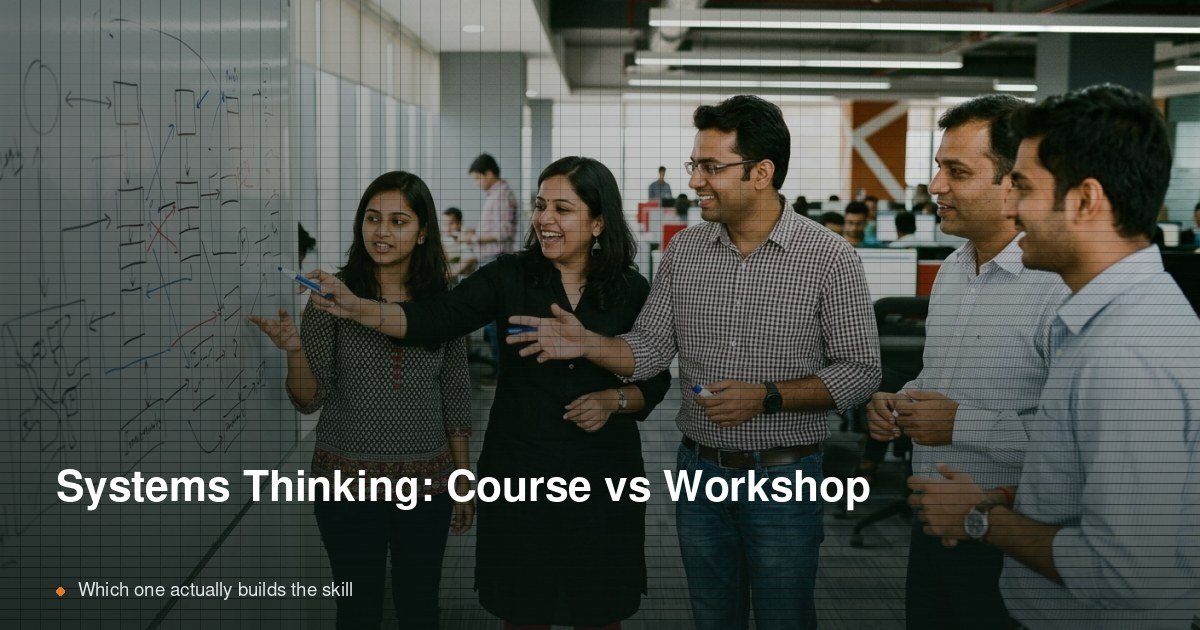
Imagine a room full of cynical executives. They have seen every management fad since 1990. They are tired. We start a workshop not with "ideas," but with "friction." We map the customer journey with brutal honesty.
Suddenly, a Director realises that their "premium" service actually causes four hours of frustration for the user. That is the spark. That is the moment of truth. We move from "How can we sell more?" to "How can we stop hurting our customers?"
The financial investment in such a workshop pays for itself the moment you identify a redundant process that was costing millions. This is where the magic happens. The air in the room changes. The cynicism evaporates. The team is no longer "working." They are solving.
Real-World Impact: Indian Innovation Excellence
To understand the power of measuring ROI of design thinking in business, we must look at those who have mastered it on Indian soil.
The Titan "Fastrack" Pivot
Years ago, Titan noticed a slump in traditional watch sales among the youth. Instead of just "marketing harder," they used design thinking to empathise with the Indian college student. They realised watches were no longer just time-tellers. They were fashion accessories. By redesigning the product and the retail experience to be "edgy" and affordable, they captured a massive market share. The ROI was not just in sales. It was in creating a brand that defined a generation.
Zomato's Hyper-Local Empathy
Zomato didn't just win by having a better app. They won by observing the unique friction of the Indian food delivery ecosystem. They solved for the "delivery partner" experience as much as the "customer" experience. By optimising routes and payment structures based on ground-level empathy, they reduced delivery times. Shorter delivery times equal more orders per hour. That is a direct, measurable ROI of a design-led strategy.
SELCO India and Rural Energy
In the social enterprise sector, SELCO used design thinking to provide solar energy to the underserved. They didn't just sell solar panels. They looked at the financial flow of a street vendor or a rural household. They realised the "barrier" was the upfront cost. They innovated the financing model, not just the technology. The result? Thousands of lives changed and a sustainable, profitable business model.
How to Fix It: A Framework for Measurable Innovation
You must demand more from your innovation initiatives. You must be bold. You must be relentless. Here is how you bridge the gap between a workshop and a win.
1. Define Your "Hard" Metrics Early
Before you touch a single Post-it note, define what success looks like. Is it a 10% reduction in customer support tickets? Is it a 15% increase in repeat purchases?
When measuring ROI of design thinking in business, focus on three pillars:
- Efficiency ROI: How much time or money did we save by optimising an internal process?
- Growth ROI: How much new revenue did this user-centric product feature generate?
- Cultural ROI: How much did employee turnover drop because people feel empowered to solve problems?
2. The Prototype-to-Profit Pipeline
Do not build a full-scale solution. Build a "Minimum Viable Prototype." Test it with ten real humans in your target Indian market. Observe their struggle. Listen to their silence. Their silence often tells you more than their words.
Refine the solution. Only then do you scale. This approach ensures that when you finally commit a heavy financial investment, the market is already hungry for what you have. This is how firms like KPMG or McKinsey approach structural shifts. They validate. They don't speculate.
3. Audit Your Innovation Portfolio
Treat your innovation projects like a stock portfolio. Some will be "Blue Chip" (small, incremental improvements). Some will be "Small Cap" (high-risk, high-reward disruptions).
You must be measuring ROI of design thinking in business across the entire portfolio. If a project isn't showing a path to a measurable outcome within a set timeframe, kill it. Be ruthless. Energy is a finite resource. Do not waste it on "zombie projects" that neither live nor die.
4. Solve the "Indian Context" Friction
Innovation in India requires a unique lens. We have diverse languages, varying internet speeds, and a deep-seated value for "Paisa Vasool" (value for money). If your innovation doesn't solve for these local realities, it will fail. Design thinking is the only tool that allows you to navigate this complexity without losing your mind.
The Cultural Shift: From Ego to Evidence
Innovation fails when the highest-paid person's opinion (HiPPO) dominates the room. Design thinking levels the playing field. It replaces "I think" with "We observed."
This shift requires a massive amount of emotional wellness within the leadership team. You must be okay with being wrong. You must value the truth over your ego. Sometimes, the data shows your "brilliant" idea is actually a dud. That is a success! You just saved the company a massive financial investment in a failing venture.
That is the hidden power of measuring ROI of design thinking in business. It provides the courage to pivot. It turns "failure" into "intellectual property."
The Call to Power: Your Turn to Lead
The era of "guessing" is over. The market in India is too competitive and too fast for you to play small. You have the tools. You have the framework. Now, you need the grit to execute.
Do not let another quarter pass by with "vague" innovation goals. Demand clarity. Demand data. Demand outcomes.
Take this action today: Identify one project in your company that is currently "in development." Ask the team for the specific, measurable outcome it is designed to achieve. If they cannot answer in thirty seconds, stop the project. Re-align it with a business goal.
Your legacy is built on the problems you solve, not the ideas you had. Start measuring ROI of design thinking in business right now. The future of your organisation depends on this shift.
FAQs: What Leaders Want to Know
How long does it take to see a return on a design thinking financial investment?
You can see "micro-returns" within weeks through process efficiency. Significant revenue growth typically manifests within 6 to 12 months as new products hit the market.
Is design thinking only for product companies?
No. Service industries like banking and healthcare in India see massive gains by measuring ROI of design thinking in business through improved customer retention and reduced service friction.
What if our team is not "creative"?
Design thinking is a system. It is a repeatable process. You do not need to be an artist. You need to be a curious observer of human behaviour. Most "uncreative" teams are just teams that haven't been given a framework.
Why do we need a consulting firm for this?
An external firm provides "objective friction." We see the blind spots your internal team has grown to accept as "normal." We push you to confront the uncomfortable truths.
How do I justify the financial investment to the board?
Present it as a risk-reduction strategy. Show them the cost of inaction. Show them the "innovation gap" between you and your fastest-growing competitor. Use the term "validated learning."