

Stop. Look at the product nearest to you. Did the person who made it actually care about your day? Or did they just care about their quarterly profit margin? Most businesses in India are built on spreadsheets. They are built on cold data and sterile assumptions. Yet, the giants of the modern era—the Tatas, the Zomatos, and the Titan Companies of the world—operate on a different frequency. They don't just sell. They solve.
The Friction That Kills Growth
Many Indian organisations are currently trapped in a "feature war." They add more buttons. They lower the price. They scream louder in their digital marketing. And yet, their growth remains stagnant. They are running on a treadmill that is slowly breaking. This happens because they have lost sight of the human at the end of the transaction.
When you ignore the emotional reality of your user, you create friction. Friction is the silent killer of Scalability. It shows up as high churn rates. It manifests as expensive customer acquisition costs. If your strategy is not a human-centred design for business growth, you are essentially building a skyscraper on sand. You might reach the tenth floor. Eventually, the weight of human dissatisfaction will bring it all down.
Why Empathy is Your Greatest Competitive Advantage
In the traditional Indian corporate world, empathy is often dismissed as a "soft skill." This is a massive strategic error. Empathy is actually the hardest, most rigorous data point you can possess. It is the ability to see the world through the eyes of the person who is struggling.
The Breakthrough in the Boardroom
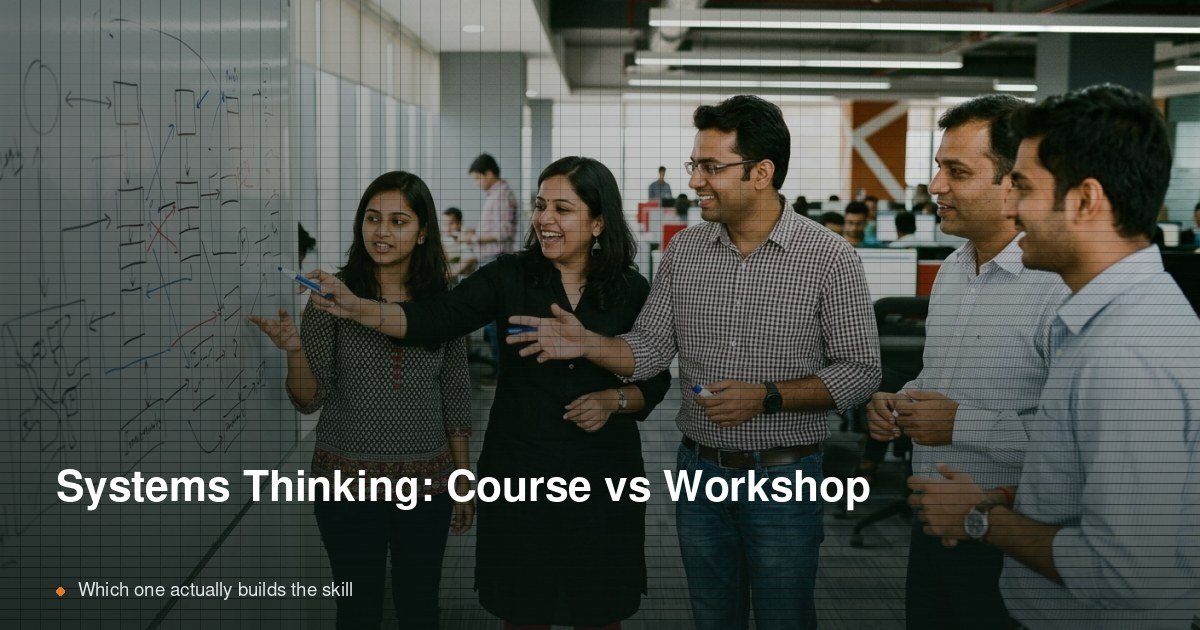
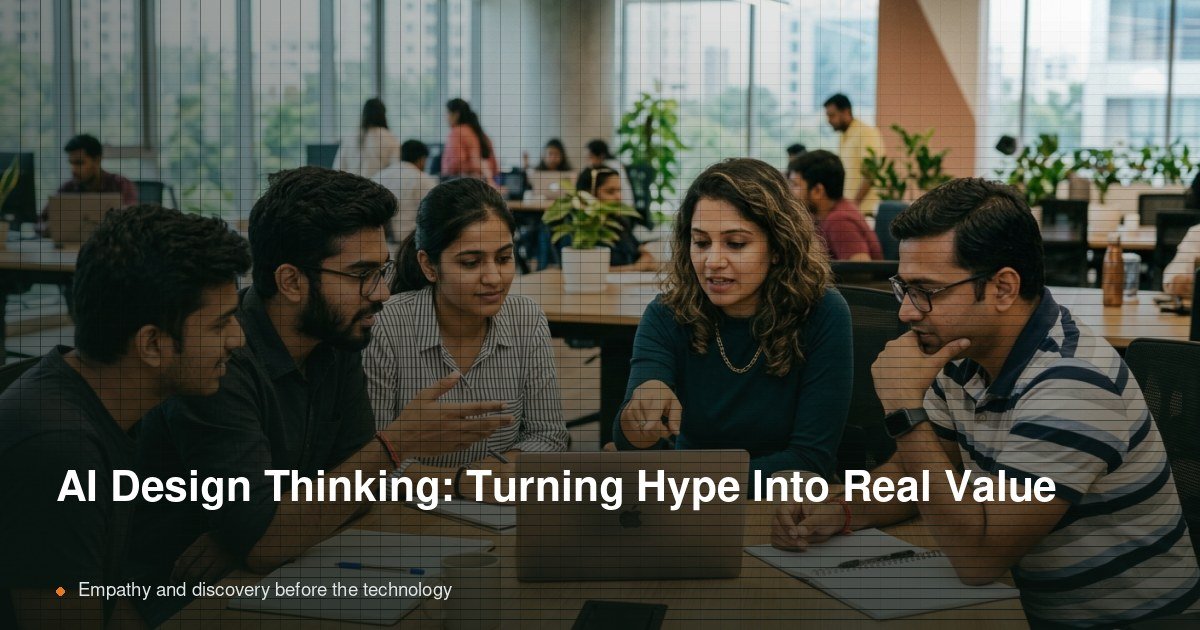
Think about a typical corporate workshop in Mumbai or Bengaluru. Most of them are dry. People stare at PowerPoints. They wait for the clock to hit five. But a true Design Thinking workshop is a radical pattern interrupt. I have seen rooms full of cynical executives suddenly lean in because they finally "saw" their customer. They didn't see a demographic. They saw a tired mother in a Tier-2 city trying to save time. They saw a young entrepreneur's anxiety.
This is the moment of breakthrough. When a team moves from "What can we sell?" to "What can we heal?", the energy in the room shifts. You can feel the electricity. This shift in perspective is the foundation of a human centered design for business growth strategy. It turns employees into innovators. It turns products into solutions.
Indian Success Stories: The 5X Growth Blueprint
How do you actually achieve five times the growth in the Indian market? It is not about working five times harder. It is about being five times more relevant. Modern organisations must transition from being "product-centric" to being "human-centric."
1. Radical Observation: The Zomato Evolution
Consider how Zomato shifted from being a simple directory to a logistics powerhouse. They didn't just look at data. They observed the "hunger anxiety" of the Indian consumer. They realised that a person waiting for food isn't just hungry. They are impatient and anxious. By designing a real-time tracking interface and a seamless "one-tap" refund system, they addressed the human emotion of hunger. This deep human-centred design for business growth strategy allowed them to dominate a crowded market.
2. Titan Eyeplus: Redesigning the Medical into Lifestyle
For decades, buying spectacles in India was a clinical, boring experience. Titan used design thinking to realise that glasses are not just medical devices. They are fashion statements. They redesigned their stores to be open, bright, and "touch-and-feel" friendly. They removed the "counter" barrier between the salesperson and the customer. This simple shift in the physical journey led to massive growth because it respected the human desire for style and dignity.
3. The UPI Revolution: Designing for Trust
The success of UPI in India is the ultimate example of human-centricity. The creators realised that for a vegetable vendor or a rickshaw driver to adopt digital payments, the system had to be faster than handing over a physical note. They designed for "Zero Friction." By focusing on the human need for instant verification and simplicity, they created a human-centred design for a business growth strategy that changed an entire nation's economy.
The Innovation Process: Rapid Prototyping
Perfectionism is just a fancy word for fear. Many Indian companies spend months developing a "perfect" product only to launch it and find nobody wants it. This is a waste of your financial investment.
In the world of innovation, we fail fast to succeed sooner. Create a messy version. Build a cardboard model. Draw it on a napkin. Show it to a real human in a local market immediately. Their feedback is the fuel for your growth. When you iterate based on real human pain, you stop guessing. You start knowing.
Culture as a Design Output
Growth is not just an external metric. It is an internal state. A human-centred design for business growth strategy must be applied to your team. If your employees are stressed and disconnected, they cannot create soulful products.
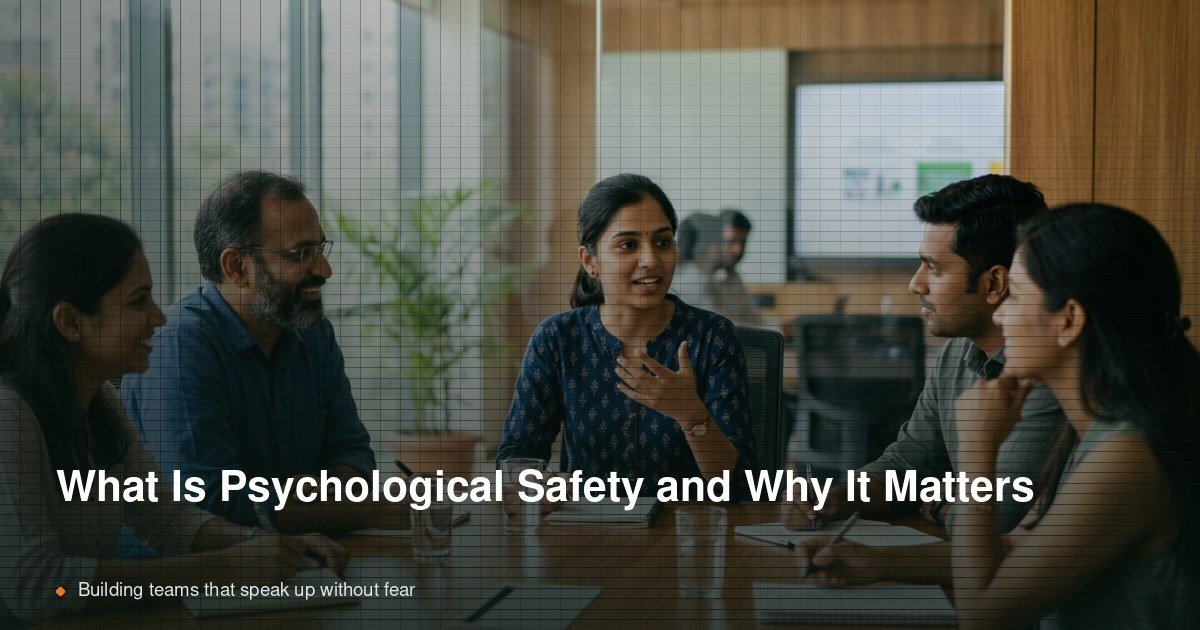
Design your organisational culture like you design your flagship product. Create a "safe to fail" environment. Encourage "crazy" ideas. When your team feels seen and heard, they bring their full creative power to the table. This is how you out-innovate the global giants.
Overcoming the "Budget" Mindset
Many leaders in Delhi or Hyderabad worry about the cost. They see innovation as an expense. I invite you to see it as an investment. Your initial financial investment in deep research and prototyping might seem higher than just copying a competitor. Yet, the cost of building the wrong thing is infinitely higher.
Operational excellence alone is no longer enough. You also need a strong focus on innovation and human connection. You must be willing to trade the comfort of the "old way" for the results of the "new way."
A Suggestion for Your Next Move
You don't need to overhaul your entire company overnight. Start small. Pick one "pain point" your Indian customers are complaining about on Twitter or LinkedIn. Take three people from different departments. Give them three hours to solve it using only empathy and cardboard. You will be shocked at the speed of the solution. This is the human-centred design for business growth strategy in its purest, most potent form.
Sometimes the simplest change makes the biggest splash. It's like adding the right tadka to a dal. It's a small move, yet it changes everything for the person eating the meal.
The Call to Power
You are at a crossroads. You can continue to compete on price and features, or you can choose to lead through deep human understanding. The market in India is evolving. Customers are becoming more discerning. They are looking for brands that "get" them.
Do not wait for your competitors to disrupt you. Become the disruptor. Commit to a human-centred design for business growth strategy today.
Look at your most popular product. Ask yourself: "What is the one thing about this that still frustrates a common user in a busy Indian metro?" Go fix that. Start now. Your 5X growth is waiting on the other side of your empathy. Claim it.
Frequently Asked Questions
1. Is human-centred design only for big Indian MNCs?
Absolutely not. Whether you are a small Kirana tech startup or a massive manufacturing plant in Pune, your end user is a human. Every business on earth can be optimised by understanding human psychology and friction.
2. How long does it take to see 5X growth in the Indian context?
Growth is a compounding effect. While a Design Thinking workshop can provide immediate "Aha!" moments, the 5X trajectory typically takes 12 to 18 months of consistent application. It is a marathon, not a sprint.
3. What is the biggest mistake Indian companies make in this process?
The biggest mistake is "theatre." Companies do the workshops and put sticky notes on the walls, yet they never actually change their products. You must be willing to act on what you learn. Empathy without action is just a nice conversation.
4. How much financial investment is required?
The financial investment varies based on the scale of your organisation. However, the ROI of a human-centred design for business growth strategy is consistently higher than traditional R&D because it reduces the risk of market failure.
5. Can we apply this to B2B services?
Yes. In B2B, you aren't selling to a "company." You are selling to a procurement manager who is afraid of making a mistake. Design your service to make them look like a hero.