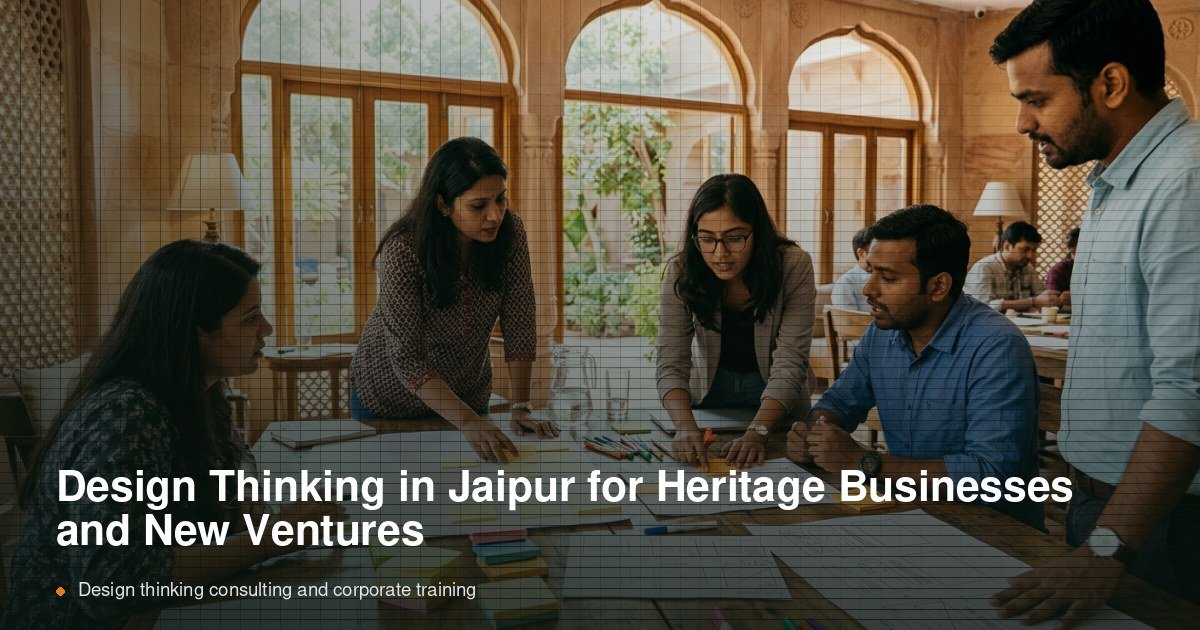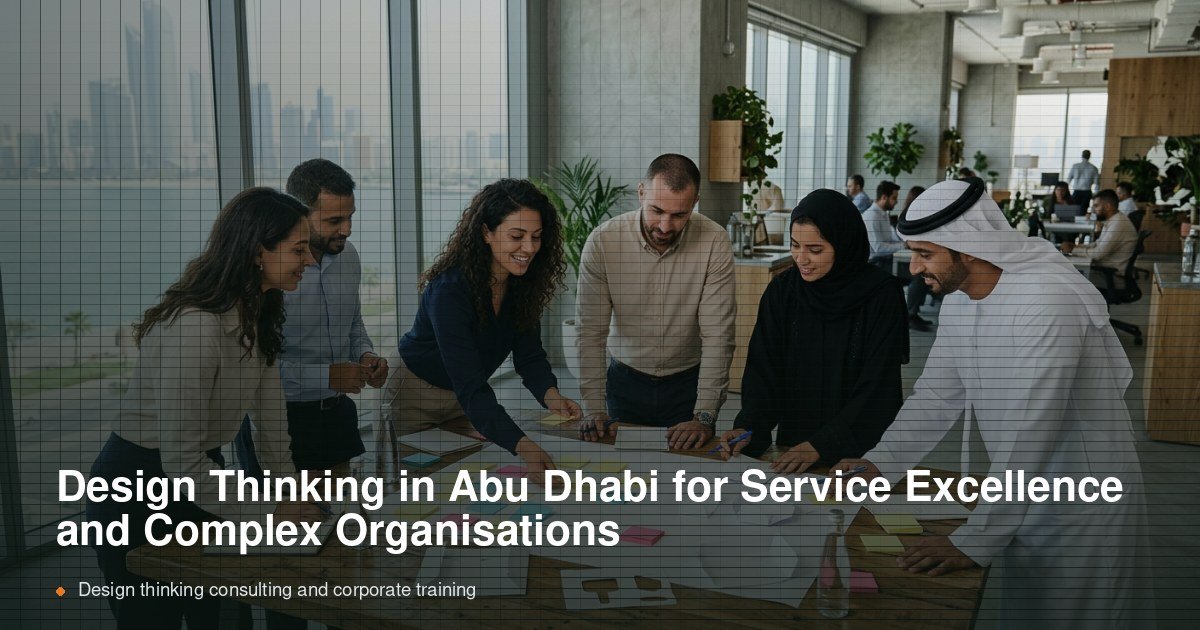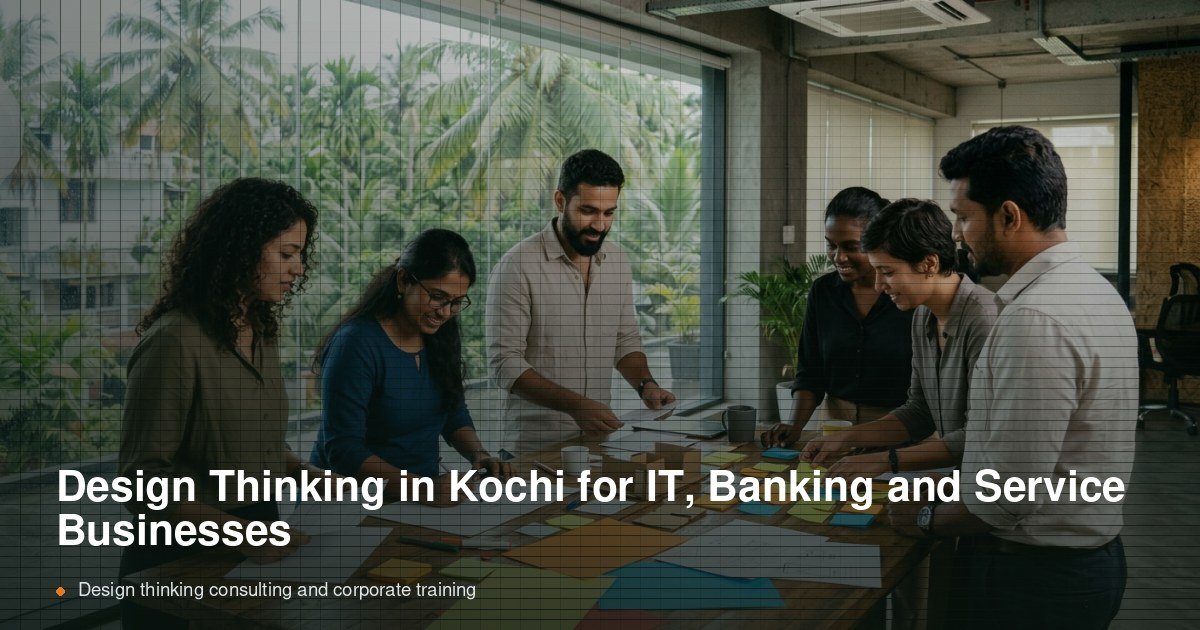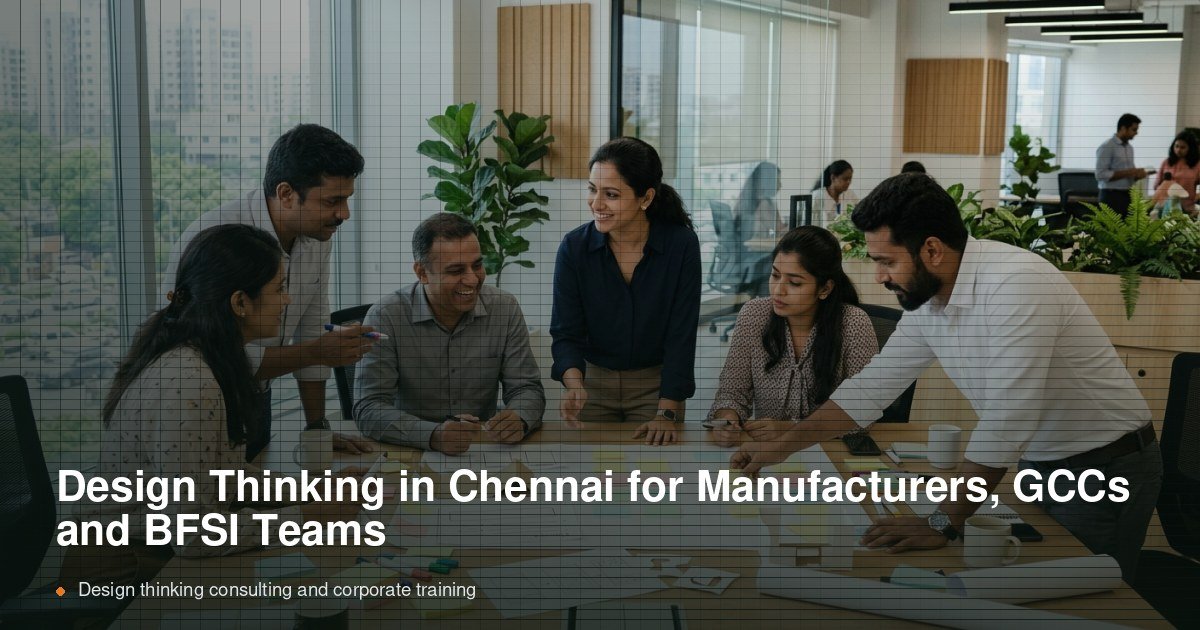

In short: Founded in 2021 by ex-Big 4 leaders, Humane Design (HDI) is a design thinking and innovation consulting and learning firm. For Hyderabad, we work with global capability centres and pharma and life sciences companies on-site or remotely, helping them move from executing briefs to owning problems through discovery sprints, team training programmes and consulting retainers.
Hyderabad has two economies that rarely share a meeting room. On one side are the global capability centres and technology offices of HITEC City, Gachibowli and the Financial District. On the other are the pharmaceutical, biotech and life sciences companies anchored around Genome Valley and the city’s long-established bulk drug industry.
Both are raising their ambitions. GCCs want to own products and outcomes rather than tickets. Life sciences companies want faster development, better patient and doctor experiences, and operations that hold up under regulatory scrutiny. Design thinking in Hyderabad serves both, but the brief looks very different in each.
Humane Design (HDI) was founded in 2021 by ex-Big 4 leaders and works with corporates in India and globally. We work with Hyderabad teams on-site at their offices or remotely, from our studio in Mumbai.
Design thinking in Hyderabad’s GCCs: HITEC City and the Financial District
A capability centre’s early years are usually about proving it can deliver. The next phase is about proving it can think: owning a product roadmap, redesigning a global process, or building something the parent company did not specify. That requires skills most centres have had little reason to develop.
From order-taker to problem owner
We help GCC teams frame problems in the language of end users and business outcomes, run their own research with internal and external customers, and bring tested proposals to global stakeholders. This is often the clearest route for a centre to earn a wider mandate.
Product discovery before the build
Engineering capacity in the city is strong. The risk is building the wrong thing well. Our new product discovery and design work helps product and engineering teams test assumptions about users before committing sprints to them.
Employee experience in a competitive talent market
GCCs here compete hard for the same engineers, analysts and managers. HR teams use design thinking to redesign onboarding, career paths and internal mobility around what employees actually experience, rather than what policy documents assume.
For pharma and life sciences teams
Regulated industries are sometimes assumed to be poor ground for experimentation. In practice, the method fits well as long as teams prototype the right things. Nobody prototypes a molecule in a workshop. They prototype the process, the service and the experience around it.
- Patient and caregiver journeys for therapies, devices and support programmes.
- Engagement with doctors, pharmacists and distributors, especially as commercial models move towards digital channels.
- Laboratory, quality and plant processes, where systems thinking shows how a change in one area affects compliance elsewhere.
- Collaboration between R&D, regulatory, manufacturing and commercial teams that work to different timelines.
Prototypes in this setting are usually service mock-ups, process walkthroughs and role-plays, tested internally first and then with patients or healthcare professionals within appropriate ethical and compliance limits.
A useful first sprint in this setting often looks at a single journey, such as how a hospital pharmacist learns about a new therapy or how a batch record moves between plant and quality teams, and asks where time and trust are lost.
Where the two worlds meet: life sciences capability centres
Several global pharmaceutical and healthcare companies run capability centres in Hyderabad, handling work such as clinical data, regulatory operations, analytics and commercial support. These teams carry both briefs at once. They are expected to show the ownership a mature GCC shows, inside the compliance discipline a life sciences company demands.
For them, design thinking is a way to move from processing requests to improving the process itself. Typical questions include:
- How can a regulatory submission workflow shared across countries be simplified without adding risk?
- What do medical and commercial colleagues at headquarters actually need from an analytics team, as opposed to what they ask for?
- Which manual handoffs between systems could be redesigned first, and who has to agree?
Answering these with research and prototypes, rather than opinion, gives the centre a credible case for taking on more.
How a typical engagement runs
Scoping
A conversation with the sponsor, often a CHRO, Head of L&D, site leader or functional head, to define the problem, the people affected and the decisions the work should inform.
Discovery sprint
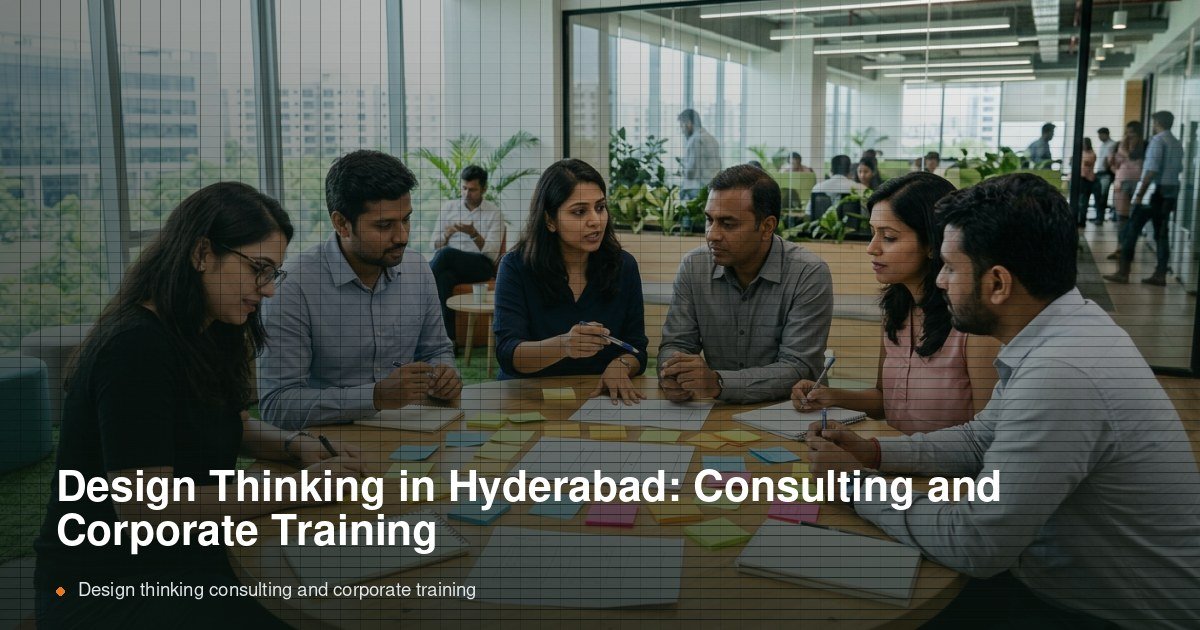
A design thinking workshop in Hyderabad usually runs as a discovery sprint of 1 to 5 days. The team interviews users, maps the current experience, generates options and tests rough prototypes before anyone commits budget.
Capability or consulting
Depending on the findings, the work continues as an in-house team training programme of 2 to 4 days to spread the method, or an embedded consulting retainer of 3 to 12 months to carry a redesign through to implementation. Our design thinking consulting services explain the consulting side in more detail, and design thinking consulting in Hyderabad typically combines on-site sprints with remote working sessions in between.
Building capability that outlasts the engagement
Many Hyderabad organisations want their own people to run the method once we step back. Our design thinking learning services are built for that, with participants applying each tool to a live problem from their own team.
Design thinking training in Hyderabad tends to work best when it mixes functions. A GCC programme might combine product managers, engineers and business analysts. A life sciences programme might bring together regulatory, medical affairs and marketing, groups that rarely solve problems in the same room.
For larger groups, design thinking corporate training in Hyderabad can be delivered in waves, with each cohort bringing a real brief and presenting its results to leadership. Our Design Thinking, Systems Thinking, Agility and Storytelling toolkits run throughout, so teams can frame problems, see how parts of a system connect, adapt quickly and make a persuasive case for change.
Organisations with teams in both Hyderabad and Bengaluru can run joint programmes. Our Bangalore page covers the product and engineering agenda there.
Frequently Asked Questions
Do you have trainers based in Hyderabad?
No. We have one studio, in Andheri West, Mumbai, and no Hyderabad office. Our team travels to the city for on-site sessions at your offices, whether in HITEC City, Gachibowli, the Financial District or Genome Valley, and runs remote sessions for distributed teams. Many engagements combine on-site sprints with remote follow-ups.
Can design thinking be used in a GxP-regulated environment?
Yes, provided the work respects existing quality systems. Design thinking is used to understand problems and design better processes, services and experiences. Any change to a validated process still goes through your change control. The method helps teams decide which changes are worth proposing, and test them on paper or in simulation first.
How is this different from the agile practices our GCC already uses?
Agile practices organise how work is built and delivered. Design thinking focuses on what is worth building and why, through research with users and early testing. The two fit together, because discovery feeds a better-defined backlog. Our Agility toolkit helps teams connect them without adding unnecessary ceremony.
Can a GCC programme include stakeholders from the parent company?
Yes, and we recommend it. Global product or process owners can join research readouts and prototype reviews remotely. Their involvement makes it far more likely that proposals from the Hyderabad centre are adopted, because they have watched the evidence develop rather than receiving a finished recommendation.
Which life sciences functions benefit most?
Commercial and medical teams redesigning doctor and patient engagement, quality and manufacturing teams improving processes, and HR teams working on talent and culture. R&D groups benefit too, mostly in how cross-functional teams collaborate and make decisions rather than in the science itself.
How soon can teams apply what they learn?
Straight away, if the programme is built around live problems. Participants in our team training programmes work on a real brief from their own function, so the research, insights and prototypes they produce are usable the following week. A follow-up session a few weeks later helps teams review progress and clear obstacles.