

Most organisations say they want innovation.
Very few are truly prepared for the discomfort that comes with it.
Here is the uncomfortable truth: if your workplace feels perfectly organised, highly predictable, and completely efficient, you are probably not innovating. You are simply improving yesterday's systems.
Real innovation is not neat.
It smells like marker ink on whiteboards. It looks like sticky notes falling off the walls. It sounds like disagreement in meeting rooms and laughter in hallways after a failed prototype.
Over the years, we have worked closely with founders, CXOs, and exhausted product teams. We have seen impressive strategy decks collapse under the weight of human fear. We have also seen small teams with limited budgets create extraordinary outcomes because they built the right culture.
So let us speak honestly about building a culture of innovation in new businesses and growing organizations. Not the polished version. The real, human one.
Why Most Organizations Get Innovation Wrong
Many leaders believe innovation starts with a lab. Or a new office space. Or hiring a "Chief Innovation Officer."
It does not.
Innovation starts with permission. Permission to question. Permission to experiment. Permission to fail without risking your career.
Most organizations are designed for control. They reward consistency. They celebrate flawless execution. That works well for operations. It does not work well for creativity.
If people are afraid to say, "This process makes no sense," you do not have an innovation problem. You have a psychological safety problem.
And no toolkit can fix that.
Building a Culture of Innovation in New Businesses Begins with Behavior, Not Strategy
You can write innovation into your annual strategy. That alone will not change anything.
Culture is behavior repeated consistently over time.
When leaders interrupt junior employees, that becomes culture. When managers punish failed experiments, that becomes culture. When teams hide bad news, that becomes culture.
When we help organizations focus on building a culture of innovation in new businesses, we begin with observing behavior. We watch meetings. We notice who speaks and who stays silent. We see how ideas are received. Are they explored thoughtfully or dismissed quickly?
We once worked with a founder who strongly believed his company was innovative. But during workshops, every idea had to pass through his approval first. Gradually, teams stopped proposing bold ideas. They presented safe ones instead. Innovation quietly faded.
He did not realize he had become the bottleneck. That was the uncomfortable reality.
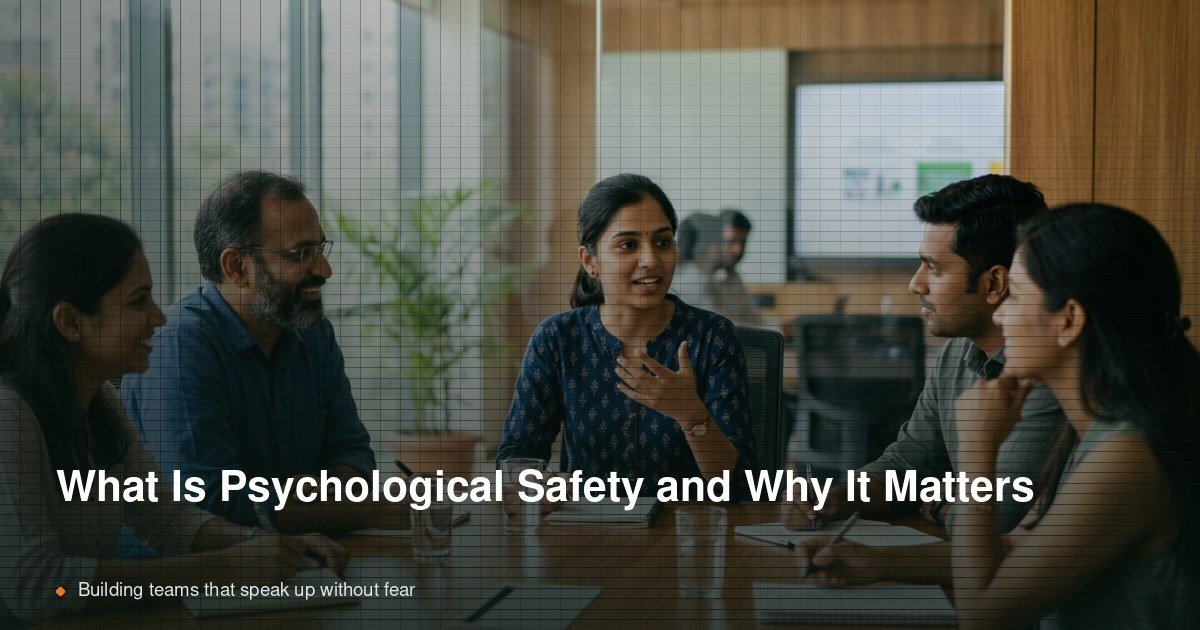
Psychological Safety Is the Real Infrastructure
Forget bean bags and open office layouts.
The true infrastructure of innovation is psychological safety.
People must feel safe to say, "We don't know." They must feel safe to challenge authority. They must feel safe to test incomplete ideas.
In one organization, we ran a simple exercise. We asked teams to share one failed project and what they learned from it. At first, there was silence. Then nervous laughter. Finally, one product manager spoke openly about a feature customers ignored.
That moment shifted the room. Others followed. The atmosphere changed.
Innovation grows in spaces where ego becomes smaller, and curiosity becomes stronger.
If you want to know whether you are truly building a culture of innovation in new businesses, ask this question: When was the last time a junior team member disagreed openly with a senior leader without facing negative consequences?
If the answer is never, there is important work ahead.
Make Customer Empathy a Daily Habit, Not a Quarterly Report
Innovation is not about having more ideas. It is about creating relevance.
Too many organizations try to innovate inside conference rooms. They debate assumptions about customers they have not spoken to in months.
We encourage teams to step outside.
Make customer conversations part of everyone's role. Not just sales. Not just research. Engineers, designers, finance — everyone.
We once observed an engineer sit next to a customer struggling with a basic onboarding process. The shift in understanding was immediate. No presentation slide could have created that impact.
Empathy is not soft. It is strategic.
When teams deeply understand customer pain points, they stop debating opinions. They focus on solving real problems. This is a powerful step in building a culture of innovation in new businesses.
Many call this design thinking. In reality, it is simple common sense: observe, listen, reframe, test, repeat.
Reward Experiments, Not Just Results
Here is a critical question: What do you truly reward?
If promotions are based only on perfect execution, people will avoid risks.
To support building a culture of innovation in new businesses, organizations must celebrate intelligent experiments, even those that fail.
Set aside small innovation budgets. Support quick prototypes. Encourage teams to test ideas in weeks, not months.
In one startup we supported, we introduced a ritual called "Friday Experiments." Every Friday, teams shared what they tested that week. Some experiments worked. Many did not.
But something changed.
Momentum increased. Learning accelerated. Energy shifted.
The organization stopped fearing failure. It started fearing stagnation.
That is when innovation becomes visible. You can see it in calendars. You can hear it in conversations.
The Power of Rapid Prototyping
Innovation is not about thinking harder. It is about testing faster.
Instead of debating a feature for three months, build a rough version in three days. Use paper. Use mock-ups. Use whatever is available.
We remember a team that built a service model using cardboard cutouts and role play. It looked messy. But it worked. Customers gave honest feedback because it was clearly unfinished.
Perfection delays learning.
Speed creates insight.
When teams adopt this rhythm, they stop becoming attached to ideas. They refine and improve continuously. This mindset is central to building a culture of innovation in new businesses.
Break Silos with Real Collaboration
Most organizations are structured like apartment buildings. Marketing on one floor. Tech on another. Finance somewhere else.
Innovation happens in the hallways.
Create cross-functional teams intentionally. Mix perspectives. Place designers next to engineers. Pair operations with product teams.
Yes, conflict will happen. That is healthy.
Innovation needs productive tension — not hostility, but meaningful debate.
We once facilitated a workshop where operations and design teams debated feasibility intensely. It felt uncomfortable at first. Then suddenly, a breakthrough idea emerged — one neither side would have found alone.
Sticky notes were everywhere. Coffee cups were scattered. The energy was real.
That is what innovation looks like. Not polished slides. Honest collaboration.
Leadership Must Model Curiosity
Leaders shape the emotional temperature of an organization.
If leaders act as though they have all the answers, others will stop asking questions.
Start meetings with curiosity. Ask open-ended questions. Admit uncertainty. Say, "We might be wrong."
It sounds simple. It is not easy.
We once coached a CEO who began ending meetings with one question: "What are we not seeing?" Over time, teams prepared thoughtful responses. They anticipated blind spots. Strategic thinking improved.
Culture shifts through repeated signals.
If you are committed to building a culture of innovation in new businesses, leadership humility is not optional. It is foundational.
Build Systems That Support Learning
Innovation cannot survive in chaos alone. It also needs structure.
Document experiments. Capture insights. Share learning across teams.
Create simple dashboards that track experiments conducted — not just revenue generated. Hold monthly reflection sessions. Ask: What did we test? What did we learn? What should we stop doing?
The balance between creativity and discipline is critical.
Innovation without structure becomes noise. Structure without innovation becomes bureaucracy.
You need both.
Hire for Mindset, Not Just Skill
Skills can be trained. Mindsets are harder to change.
When hiring, look for curiosity. Look for resilience. Ask candidates about failures. Listen carefully.
Do they blame others? Or do they reflect and learn?
An innovative organization is built by people who are comfortable with uncertainty. People who can say, "Let's try."
In the long run, building a culture of innovation in new businesses depends more on who you bring into the organization than on which frameworks you adopt.
The Closing: Innovation Is a Daily Choice
Building an innovative organization is not a one-time initiative. It is a daily practice.
Choosing curiosity over certainty. Learning over ego. Experimentation over perfection.
Building a culture of innovation in new businesses is not about copying Silicon Valley. It is about designing an environment where people feel safe to think differently and act boldly.
It will be messy. It will test patience. Some days it will feel chaotic.
That is normal.
Real innovation is not a polished keynote presentation. It is a team standing around a whiteboard at 7 p.m., passionately debating how to serve customers better.
If you are ready for that level of honesty, you are ready to lead meaningful transformation.
If not, no framework in the world can create innovation for you.
Frequently Asked Questions About Creating a Culture of Innovation
How long does it take to build a culture of innovation in an organization?
Longer than most expect. Shorter than most fear.
Behavioral shifts can happen within months if leadership remains consistent. Deep cultural change can take years. Culture builds over time.
Can large organizations build a culture of innovation in new businesses style?
Yes. But they must decentralize decision-making. Large organizations need smaller, empowered teams within them. Autonomy is essential.
What is the biggest barrier to innovation in organizations?
Fear. Fear of failure. Fear of looking foolish. Fear of losing control. When fear is addressed, creativity expands.
Do we need a formal innovation program?
Programs help. But they are not enough. Without behavioral change and leadership commitment, programs become symbolic rather than impactful.
How do we measure innovation culture?
Track leading indicators such as:
- Number of experiments run
- Speed of prototyping
- Employee perception of psychological safety
- Frequency of cross-functional collaboration
Revenue growth will follow.