
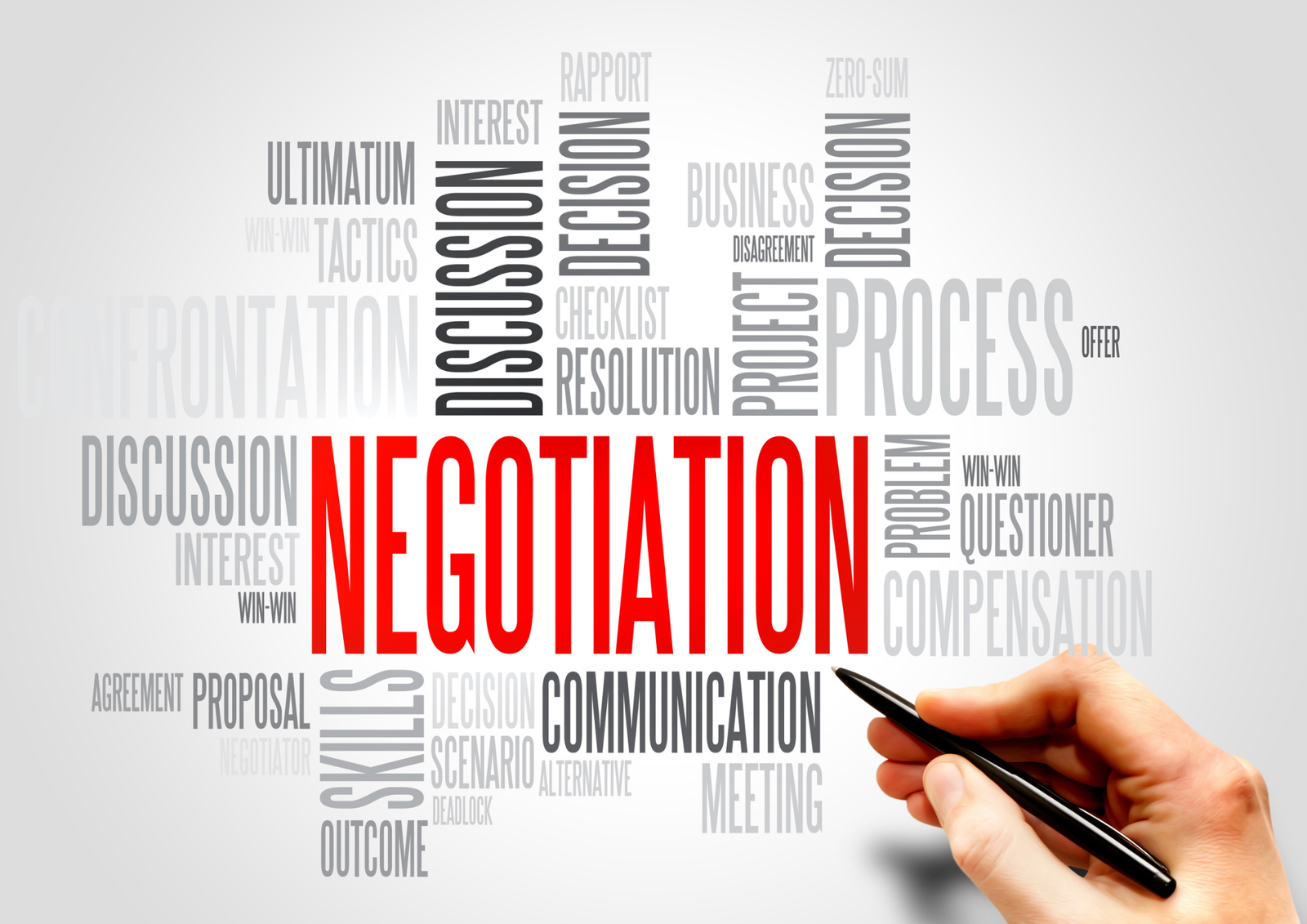
People who attended B-school would agree with the fact that negotiation is an important part of doing business. The schools taught us how to negotiate. Somehow, many of us forgot the basic principles, as we got too busy climbing the success ladder. But, at some step or the other of the ladder, you might find yourselves getting stuck or getting a raw deal due to under-par negotiation. And then you realize you need to brush up on your negotiation skills or learn the art of negotiation from scratch.
The art of negotiation – What does it take?
A successfully negotiated deal is a result of harmony between the negotiators.
Now, before we go further, here’s a question for you: What’s the ultimate aim of any negotiation?
Answer: The ultimate aim is to come to an agreement that benefits BOTH parties.
However, when two parties agree it does not always mean that both are benefiting. Sometimes, due to a lack of the art of negotiation in business, one party may lose more than it gains. One party may agree to the deal despite not benefiting much.
So, one of the indicators of a successfully negotiated deal is that both parties agree AND both parties benefit from the deal.
“Let us move from the era of confrontation to the era of negotiation”
- Richard M. Nixon (37th President of the United States)
Interestingly, a few design thinking principles can help you become a master negotiator. Design Thinking is catching up fast with business owners, CXOs, and managerial-level people. Its principles use more human psychology than simple technology. The same applies when you are negotiating. Remember, the person sitting in front of you is a human. So, you ought to touch the human side.
How To Master The Art Of Negotiation In Business With Design Thinking
#1: Goal Setting & Clarity

Forget negotiation, even your life may seem purposeless without a goal. So, you cannot sit at the negotiation table without a clear goal in your mind.
Ask yourselves, what do you want from this deal? You must also know what the other party expects from this deal. Without this knowledge, you can hardly become a master negotiator.
Meet your stakeholders a day before the negotiation meeting and ask them the following questions:
- What do we both want from this deal?
- What are our goals?
- What is our idea of a successful negotiation?
Having a common goal, which is clearly understood by both parties, creates a profound impact on your negotiation.
Move forward with the negotiation meeting only when you have defined a goal. If not, postpone the meeting. Yes, defining a goal is THAT important!
Design Thinking encourages all stakeholders to engage in clear goal setting and having as-much-as-possible clarity. Be clear when you talk and propose your points during the negotiation meeting. Do not hesitate in this regard. You must put forward what you believe you deserve as the outcome of the negotiation. When you have a set goal, you have more clarity when you communicate. Otherwise, you will only beat around the bush. Hesitation, assumption, and vagueness have no place in the art of negotiation in business.
In the world of Design Thinking, we call it setting up a shared mission/ purpose and keeping it fluid. Remember it is possible that both parties will get clarity as and when they progress with the negotiation discussions.
#2: Being human-centered
Negotiations involve humans. And every human being is essentially always trying to just do their best. So design thinking promotes a mindset of always keeping this perspective. Always be considerate of the people across the negotiation table.
When you operate from this mindset, you may eliminate a lot of strain from a negotiation. For example, consider a situation where a manufacturing company is having trouble with the labor union. If the management doesn’t remember that the labor force is really just humans with the same basic needs as themselves, they may end up trying to squeeze them or get much more benefit out of the negotiation than what the labor force would. However, with a design-thinking led mindset of being human-centered, the management will be able to objectively evaluate the needs of the other humans across the table and truly consider their needs. This is how you develop the art of negotiation in business.
 Also, when the stakes are high, human emotions run high too. In situations like these, it becomes all the more important to not take anything personally. You are here to do a business deal. Simple.
There are times when meetings turn sour. In such a case, avoid starting your sentences with “you made….” or “you have….” or “it’s your fault that….” Such sentences indicate a personal attack. They trigger an even higher wave of emotions, which can simply collapse the meeting. This might leave zero space for negotiation.
The trick is to focus on the actual deal for which you have gathered to negotiate. It would become easier to do this if you implemented the first principle of design thinking.
Remember the ultimate aim of a successful negotiation. It is to benefit both parties. You are not here to win a battle. You are here to come to a mutual agreement.
Do not limit the other party to a choice of just a “yes” or a “no.” Work on each other’s interests. This strengthens the negotiation. Listen to the other party. Do not be in a hurry to put your position. Use silence as one of your negotiation tricks.
If you can do this, then you are already beginning to master the art of negotiation in business.
#3: Be experimental
Design thinking helps you develop a mindset of being bold and experimenting. There’s never a one-size-fits-all solution. And unless you’re open to trying new things, you will never really be progressing.
When we extrapolate this mindset to the art of negotiation in business, it translates to being open to new and innovative negotiation tactics. Going back to the manufacturing company example, being experimental could mean doing something radically different which no other manufacturing company may have thought of. Maybe this means actually surprising the labor union by offering them some never-before bonus in exchange for something valuable to the company! Generate ideas for mutual benefit. This can happen only when you know what the other party expects from the negotiation. Again, the first principle of design thinking comes into play! In fact, you must mix the first and the second principles and combine them with this third principle.
Be open to experimentation. This includes being open to trying, testing, and even failing. Nothing great was ever born out of doing the same things as before!
#4: Welcome feedback and iterate
Further to the mindset of being experimental, design thinking strongly encourages one to ask for feedback. It advises using this feedback to iterate and improve the solution with every round of feedback received.
 In business negotiations, it’s not uncommon to find parties “freezing” the deal for the moment because none of them are able to come to a mutual agreement. Or the parties may find themselves in a situation wherein they must leave the table empty-handed and with no real result.
This is where being feedback and iterative-oriented helps. Of course, along with all the other design-thinking ways explained earlier!
With this mindset, negotiating parties may use an alternative route where instead of freezing conversations, they agree to ponder over the feedback received. And then come back with an iterated new negotiation deal. Out-of-box thinking is important. It creates an impression on the other party. It also makes you feel better about your position.
Conclusion:
Trees that don’t “negotiate” with the wind often find themselves getting uprooted. Do you want this to happen to you? It is similar to the situation discussed in the previous point. Rigidity like that of an oak tree can make you leave the meeting room empty-handed. It’s like getting “uprooted” from the negotiation table.
The world goes around through negotiation. It’s a vehicle that makes business “rides” smoother and easier.
Imagine a world where nobody negotiated! I put a position; you put a position. None of us are ready to adjust to each other’s expectations and goals. What would be the outcome?
There would be no such thing as a “deal.” It would only be an “I-win-you-lose” or “you-win-I-lose” situation. Mutual agreements happen through the art of negotiation. This creates a win-win situation.
It’s also true that negotiating requires practice. It’s a skill that you acquire over time and refine it as you go along. As you observe the nuances of human psychology, you master the skill. You know when to put your stand or pull away.
Using the principles of design thinking at the negotiation table can create many interesting turns in your meeting. Those of you who were curious about the importance of design thinking will now know how vital it is for business negotiations. Ultimately, you close a deal where both of you mutually agree. Both parties must come out of the meeting room with a smile on their faces, not a frown.
“For me, a relationship is very important. I can lose money, but I cannot lose a relationship. The test is, at the end of a conversation or a negotiation, both must smile.”
-Sunil Mittal (Indian billionaire and industrialist)
About the author, Ajay Aggarwal
 A Haryanvi by origin, an entrepreneur at heart, and a consultant by choice, that’s how Ajay likes to introduce himself! Ajay is the Founding Partner at Humane Design and Innovation Consulting (HDI). Before starting HDI, Ajay founded the Design Thinking and Innovation practice at KPMG India. His 16+ years of professional career spans across various roles in product and service design, conducting strategy workshops, storytelling, and enabling an innovation culture. He has coached 50+ organizations and 2000+ professionals in institutionalizing design and innovation practices. He loves to blog and speak on topics related to Design Thinking, Innovation, Creativity, Storytelling, Customer Experience, and Entrepreneurship. Ajay is passionate about learning, writing poems, and visualizing future trends!
We at Humane Design strongly believe in the human ethos and draw inspiration from humans and other elements of nature to design innovative solutions for organizations of all sizes. We will be glad to be your success partner. Email us your requirements at explore@humaned.in.